
Stop Rewriting Your Robot Stack
Prototype fast and iterates towards production from day one with copper-rs skills for coding agents like Claude or Codex.
Building a robot has to be an iterative process. You cannot go from complete specifications and zero code to a finished system in one continuous motion.
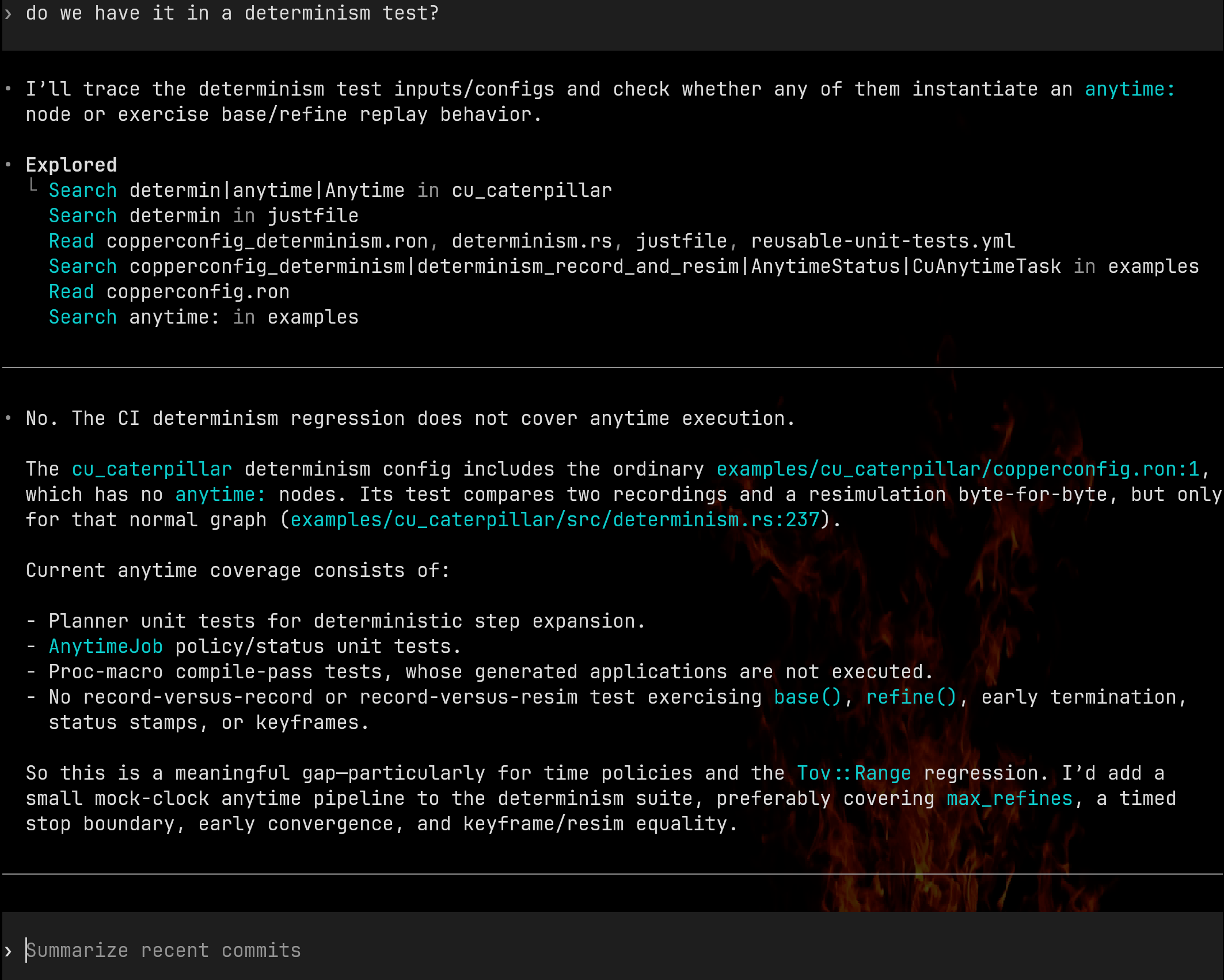
Codex helping us on copper-rs for the upcoming Anytime Tasks
This is why flexible frameworks like ROS 2 are so valuable during the early stages of robot development. You start with a rough MVP, integrate all the quirks of the hardware, discover the limitations of the sensors, improve the actuation, adapt the algorithms, find corner cases, and repeat. A dynamic software stack is important during this phase.
The problem starts when you try to bring the robot to a production-grade state. The flexibility begins to backfire. Scheduling becomes unmanageable, allocations appear everywhere, and you run into bottlenecks, jitter, and all the other problems that copper-rs addresses at its core.
Many companies follow the same path. They start with ROS, eventually hit a wall, and port the system to Copper. Waiting that long deprives them of the deterministic dataset they could have been building from the beginning. It also means accumulating months or years of headaches before finally deciding to move away from ROS.
But why not have both?
You should be able to prototype quickly, go from zero to a working robot at the speed of light, and still follow a continuous path toward a production-grade system.
This is now possible with our newly developed copper-rs skills for coding agents like Claude by Anthropic or Codex by Open AI.
These skills put your agent on the right path from the beginning of the project and guide it toward a sustainable, maintainable codebase.
copper-arch teaches the agent how robots are structured with Copper.
copper-workflow encourages the agent to follow a standardized workflow while developing your project.
copper-component-design explains how to design and use the different Copper components, including tasks, sinks, sources, and bridges.
copper-ron-config covers configuration and tuning at the runtime level.
copper-debug-replay ushes the agent to use deterministic replay and the logging APIs to validate each component and develop integration tests around them.
Why does it work?
It comes down to the combination of the Rust language, Copper’s compile-time runtime generation, and these skills.
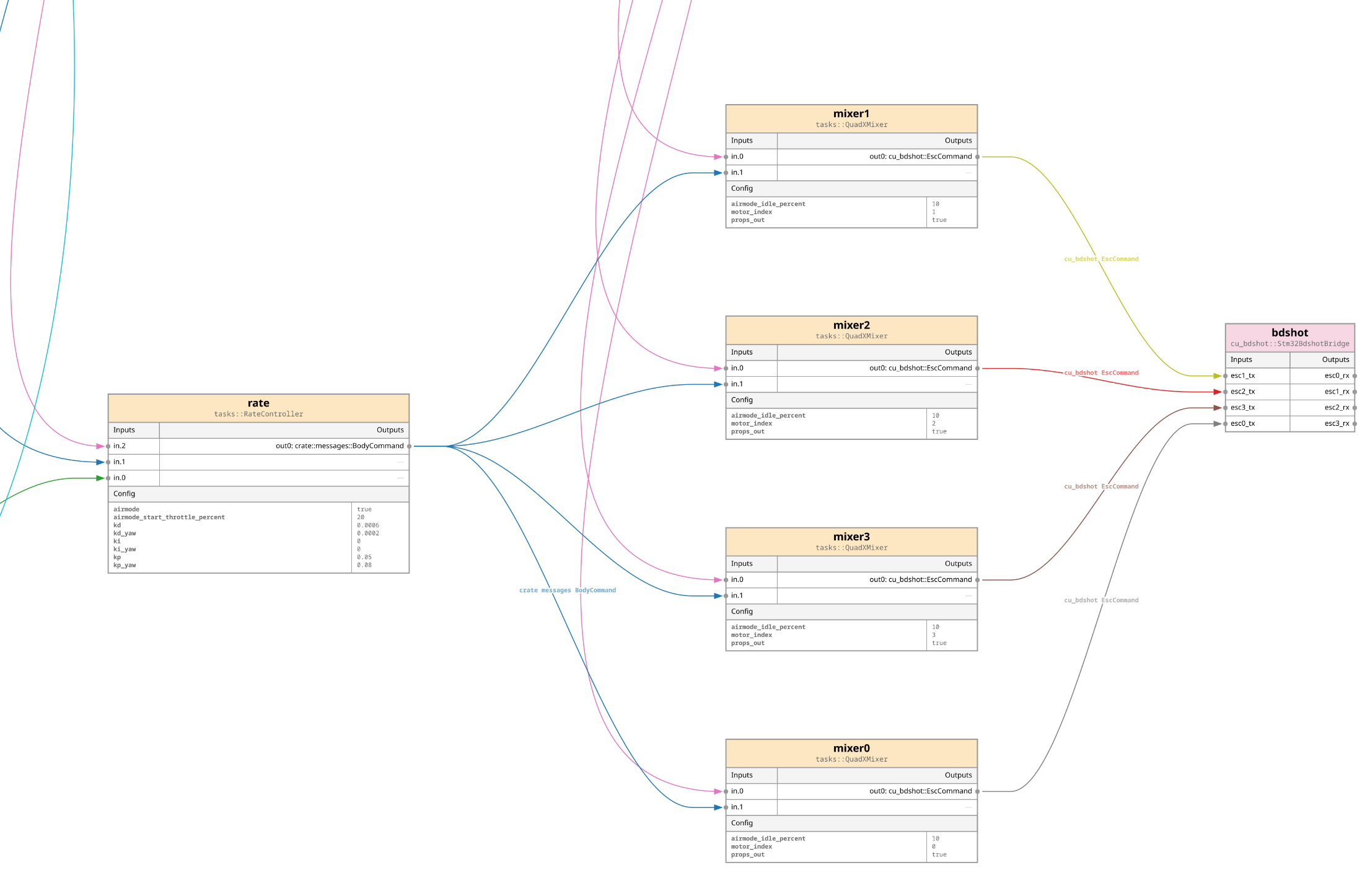
Skills teaches the agent how copper projects are structured, like this DAG.
Rust constrains the agent at compile time and forces it toward a repeatable, memory-safe structure. This removes entire categories of mistakes and lets the agent focus primarily on logic errors. As a bonus, Rust is highly portable. You can test hardware-facing code from the comfort of a standard PC and iterate on it before fighting with the target hardware.
Copper removes concurrency issues and compartmentalizes the software stack into small, testable components. Determinism allows the agent to repeat experiments until they work. Components can be tested locally before deployment, and a standard set of messages and data structures guides the agent toward high-performance designs from day zero.
Finally, the skills we just released speedrun the entire process. An agent could read the full copper-rs source code every time and reconstruct most of this knowledge, but doing so would be slow and error-prone.
Happy vibe coding!
